


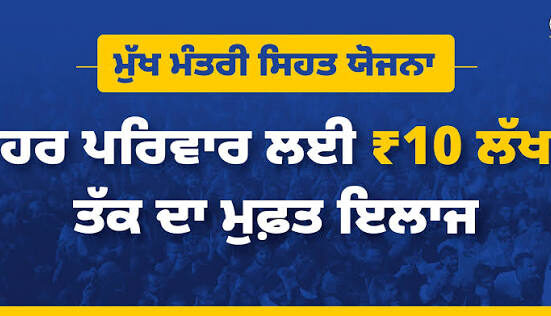
• Under the ‘Chief Minister’s Health Scheme’, emergency treatment is available with a health cover of Rs 10 lakh, reducing the financial burden on families in Punjab.
• ‘Chief Minister Health Scheme’ helps families in the state to get timely treatment in case of life-threatening medical emergencies.
• No family should delay treatment due to financial constraints, ‘Chief Minister Health Scheme’ is ensuring timely treatment for all: Dr. Balbir Singh
Chandigarh; April 4:
Punjab’s flagship Mukhyamantri Sehat Yojana is emerging as a crucial pillar of health security, providing coverage of up to ₹10 lakh per family and enabling timely treatment while reducing the financial burden during sudden medical emergencies. Several diseases, such as heart attacks, cancer, and birth complications, can strike at any time, so the Punjab government’s approach is focused on bridging the gap between medical need and affordable treatment through a wide range of public health interventions.
Diseases like heart attacks, cancer, and birth complications can strike without warning, causing sudden, severe symptoms that require immediate medical attention to prevent serious complications. This suggests that such health conditions often develop stealthily and strike without warning, leaving little time for decision-making. This growing concern in Punjab is being addressed through financial preparedness, with government-backed initiatives like the Chief Minister’s Health Scheme aiming to bridge the gap between medical need and affordable treatment.
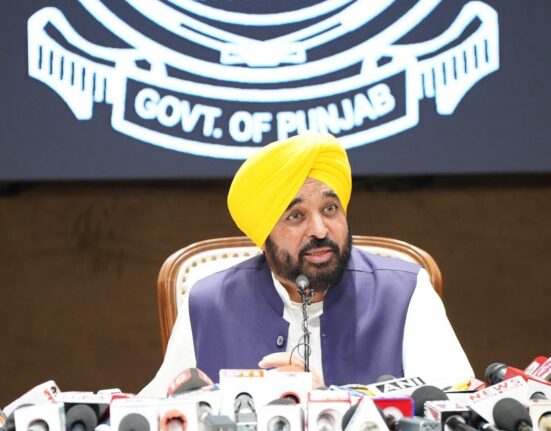
According to the Punjab government’s Health and Family Welfare Department, led by Chief Minister Bhagwant Singh Mann, the scheme provides free treatment up to 1 million rupees per year to every family. The scheme covers treatment for more than 2,300 ailments in both government and private hospitals.
Global health data highlights the need for timely action, highlighting the hidden onset of major and serious illnesses. According to the World Health Organization, diseases like heart disease, cancer, diabetes, and respiratory problems cause approximately 75 percent of deaths worldwide each year, and many sufferers are unaware of their risk. Dr. Isha Arora, Medical Officer of Medicine at Mohali District Hospital, said that by the time patients come to us, the disease has often progressed to the next stage. She further stated that early detection can help improve outcomes, but it is still not prioritized. She added that people rarely get regular checkups because the inadvertent detection of symptoms creates a false sense of security.
Medical experts emphasize that when an emergency strikes, time becomes the most crucial factor. According to the American Heart Association, even a few minutes’ delay in treatment for a heart attack or stroke can cause permanent damage and even lead to death. Doctors point out that patients typically feel hesitant at such times. Dr. Isha Arora said that families often start considering the cost before treatment begins, and this delay can be dangerous. In this context, financial security schemes like the Chief Minister’s Health Scheme are expected to play a transformative role.
The scheme has received significant traction across Punjab, from coverage to actual care delivery. Officials say that over 3.3 million families have been enrolled under the scheme, with millions of patients admitted to hospitals, particularly for critical illnesses like dialysis, cancer, and heart disease. According to Punjab’s state health agency, over 3.3 million beneficiaries have been successfully registered under the scheme, and 198,793 free treatments have been approved, amounting to approximately ₹33,001,32,533. Of this total, ₹59,34,18,468 has already been disbursed to hospitals. People across all age groups, from children to the elderly, have benefited from the scheme, which provides treatment for critical illnesses like heart surgery and cancer care.
According to health department sources, this initiative has helped many families reduce the cost of expensive medical care, which previously required them to borrow money or sell assets. This is particularly important in the Indian context, where National Sample Survey Office and government-supported studies have found that out-of-pocket expenditure accounts for approximately 47 percent of total healthcare expenditure.
Early signs point to encouraging trends on the ground, although comprehensive evaluation is still ongoing. These include increased patient willingness to seek treatment at a hospital, reduced delays in emergency admissions, and in some cases, a tendency to seek testing at an earlier stage.
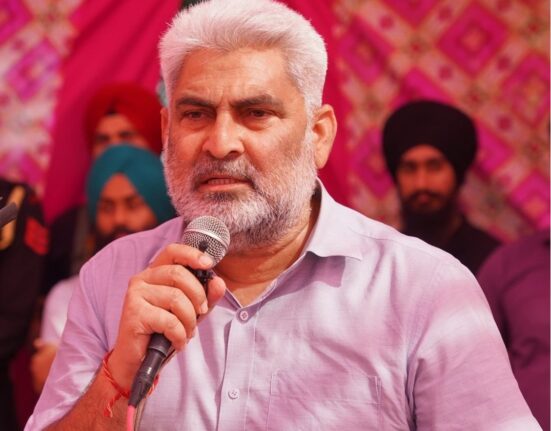
Health Minister Dr. Balbir Singh said that this scheme is part of a comprehensive effort to ensure equitable access to healthcare services across the state. He said, “Our aim is to ensure that no family faces delays in treatment due to financial difficulties. We are continuously working to expand coverage, improve hospital networks, and further strengthen implementation.”
The enrollment drive is progressing rapidly, and the state health agency is focusing on targeted awareness campaigns to educate beneficiaries on how and when to use the scheme. Officials overseeing the implementation said continuous efforts are being made to increase awareness, simplify the claims process, and ensure a smoother and more accessible experience for both hospitals and patients.
At the same time, experts emphasize that preventive health care remains a significant gap. Regular checkups, early screening, and monitoring of risk factors are still limited in rural areas. National Family Health Survey data show that only a quarter of rural adults have received a basic health checkup, while cancer screening rates among women are less than 2 percent. Health insurance provides a safety net in the event of a diagnosis.
Health emergencies cannot be predicted, but preparedness can be strengthened. Financial protection, increased awareness, and a focus on preventive care through the Chief Minister’s Health Scheme are further strengthening Punjab’s health infrastructure. Experts say that when illness strikes without warning, the difference between delay in seeking treatment and timely care often determines the outcome, whether it’s recovery or long-term illness. Therefore, preparedness becomes not just a policy priority, but a necessity.


Leave feedback about this