

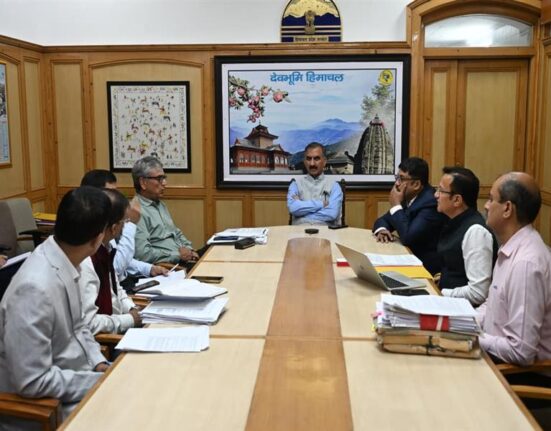
SHIMLA, India — Deep in the mountain corridors of Himachal Pradesh, the first gears of India’s massive 2027 Census have begun to rotate. Chief Secretary Sanjay Gupta convened a high-level state training conference on Wednesday, signaling the start of a multi-year logistical odyssey that will eventually account for every household in the state.
The meeting, held on February 11, 2026, focused exclusively on “Phase 1”: a rigorous house-listing and housing census designed to map the state’s domestic landscape before the actual population count begins.
The Digital Mandat: Census
Unlike previous iterations, the Census of India 2027 is leaning heavily into digital infrastructure. Chief Secretary Gupta instructed officials to treat technological preparedness as a “top priority,” emphasizing that a seamless digital rollout is the only way to ensure the data remains “transparent and error-free.”
- Training Focus: Rapid deployment of personnel across all districts.
- Human Resources: Mobilizing thousands of state workers for grassroots data collection.
- Tech Integration: Utilization of mobile applications and real-time monitoring to replace traditional paper-heavy methods.
Coordinated Grassroots Strategy
The scale of the operation requires a “whole-of-government” approach. Rajesh Sharma, Secretary of the General Administration Department (GAD), outlined a complex grid of responsibilities, bridging the gap between state-level policy and village-level execution.
“The Census is a national responsibility that demands absolute synchronicity between departments,” Gupta told a room filled with Divisional Commissioners, Deputy Commissioners, and Municipal heads.
Why This Matters for India
The 2027 Census—the 16th in India’s history—is more than a headcount. It serves as the bedrock for:
- Resource Allocation: Determining the distribution of central and state funds.
- Policy Accuracy: Updating socio-economic data that has remained largely stagnant since the 2011 count (after the 2021 Census was delayed).
- Digital Evolution: Testing India’s capability to execute the world’s largest digital administrative exercise.
The Union Government has already earmarked ₹11,718.24 crore for the national project. In the snow-bound regions of Himachal Pradesh, where terrain and climate dictate strict windows of operation, the “Phase 1” house-listing is expected to commence locally between April and September 2026.







Leave feedback about this