

Chandigarh, December 19
Punjab is fast emerging as a renewable energy frontrunner, drawing power from two abundant natural assets — sunshine and agricultural residue. Under the leadership of the Punjab Energy Development Agency (PEDA), the state has achieved landmark progress in 2025 by scaling up solar and bioenergy projects that are reshaping its energy landscape.
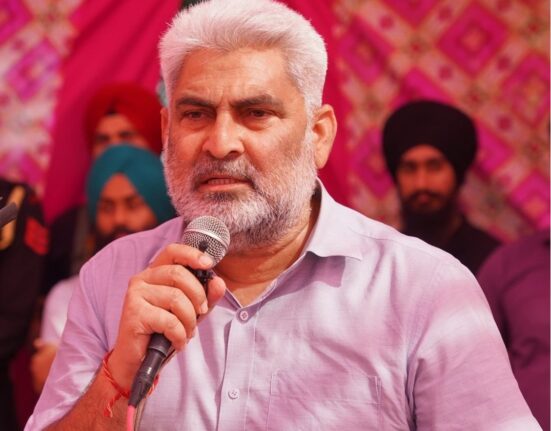
Minister for New and Renewable Energy Sources Aman Arora said on Friday that Punjab had “turned policy into power,” reporting major gains in solar capacity, biofuel production, and agricultural decarbonization.
“From homes powered by the sun to farms running on renewables, Punjab is embracing a sustainable transformation,” Arora said, highlighting PEDA’s role in leading this shift.
In Bathinda, a 4 MW ground-mounted solar power project was commissioned this July at Bhagi Bandar, while two similar projects — at Kothe Malluana and Shergarh — are underway. Sixteen grid-connected agricultural pumps have been installed on the Peerkot feeder to cut carbon emissions from irrigation, with four more being added soon.
Across Punjab, 4,850 off-grid solar water pumps have been deployed, and 277 villages identified to become energy self-sufficient under the Model Solar Village Scheme. PEDA has also installed 2.6 MW of rooftop solar power plants across 148 government buildings and illuminated 299 villages with more than 4,000 solar streetlights. Another 1,200 lights are currently being set up in 65 villages.
The state’s push toward bioenergy is equally transformative. Fifty-seven compressed biogas (CBG) projects with a total capacity of 822 tons per day have been sanctioned, expected to consume over 2.7 million tons of paddy straw annually. Six of these projects are already operational, while five more, along with a major bioethanol facility in Bathinda, are nearing completion. Together, they will channel more than 3.3 lakh tonnes of paddy straw into renewable fuel.
“This isn’t just waste management; it’s a circular economy in motion,” Arora said. “We’re turning agricultural waste into wealth while cleaning our air.”
Punjab’s renewable mix also includes a 40 MW canal-top solar project, a 14 MW co-generation plant at Batala Sugar Mills, and a 2 MW mini-hydel plant in Dhariwal, reflecting a diversified approach to green energy.
PEDA’s achievements have been recognized nationally, earning the State Performance Award (Group-3) under NECA 2025, presented by President Droupadi Murmu.
Administrative Secretary for New and Renewable Energy Dr. Basant Garg said Punjab is not just adopting renewables but “integrating them into the very fabric of development.”
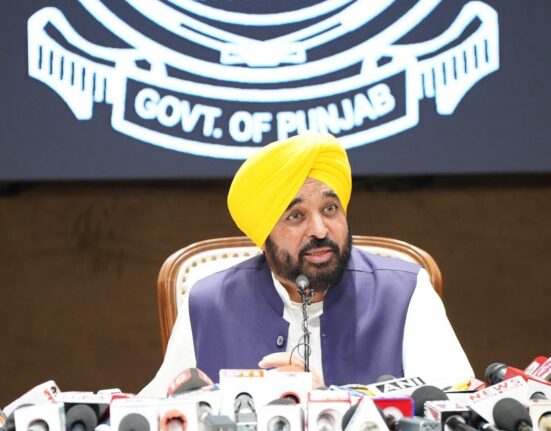
Chief Minister Bhagwant Singh Mann’s government, Arora added, is advancing a vision where “energy conservation, farmer prosperity, and environmental stewardship converge.”
“The true measure of progress,” he said, “is in the farmers whose irrigation costs have fallen, in the villages lit after dusk, and in the air we breathe — cleaner every day.”




Leave feedback about this