

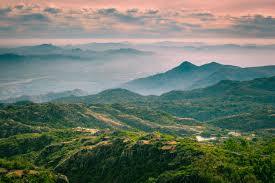
Haryana Unveils Concrete Action Plan for Aravali Conservation Till 2030; Green Wall Project on Fast Track: Rao Narbir Singh
Aravali to Act as Natural Shield Against Desertification, Land Degradation, and Drought
Chandigarh, January 1
Haryana Environment, Forest and Wildlife Minister Rao Narbir Singh said that the state government has prepared a comprehensive action plan for conservation of the Aravali mountain range till 2030, underscoring its commitment to protecting this vital ecological zone. The plan is being implemented through the Haryana Aravali Green Wall Project, aimed at combating desertification, land degradation, and drought across southern Haryana.
Expressing gratitude to the Central Government, the Minister said that it is a matter of pride for Haryana to host this significant event at the IUCN Pavilion, reflecting the state’s leadership in sustainable environmental practices.
Also Read
He highlighted that under the visionary leadership of Prime Minister Sh. Narendra Modi, transformative initiatives such as Mission LiFE (Lifestyle for Environment) and ‘Ek Ped Maa Ke Naam’ have turned environmental protection into a people-driven movement, encouraging sustainable living at every level.
Inspired by the Prime Minister’s vision and under the leadership of Chief Minister Sh. Nayab Singh Saini, Haryana has launched several community-based programmes including Oxy Van, Pran Vayu Devta Yojana, and Van Mitra Yojana. These initiatives are expected to play a crucial role in strengthening Aravali conservation by promoting public participation and green livelihood opportunities.
The Minister said that the government has also prepared a proposal to provide an annual honorarium to farmers for conserving native tree species such as ‘Jati’ and ‘Roheda’ in Mahendragarh, Rewari, Narnaul, Charkhi Dadri, Badhra, and Loharu, modeled on the Pran Vayu Devta Yojana. This step will help maintain greenery and engage local communities directly in conservation efforts.
Aravali: Haryana’s Ecological Backbone
Rao Narbir Singh emphasized that the Aravali mountain range is central to Haryana’s environmental stability, serving as a natural shield against desertification and a vital source of biodiversity, water security, and climate regulation. It supports groundwater recharge, improves air quality, mitigates climate change impacts, and sustains livelihoods in arid and semi-arid regions.
The Aravali range, he noted, is also of global ecological and cultural importance, symbolizing the deep interrelation between humans and nature.
He added that through the Aravali Green Wall Project, Haryana will actively cooperate with other Aravali states—Rajasthan, Gujarat, and Delhi—to scale up conservation efforts. Notably, the Gurugram Aravali Biodiversity Park has set a national example of ecosystem restoration, being declared India’s first OECM (Other Effective Area-Based Conservation Measure) in line with IUCN guidelines.
Youth and Community Participation
To involve youth and generate local employment, Van Mitras have been appointed at the village level across Haryana. Under the Pran Vayu Devta Yojana, trees over 75 years old are provided an annual pension of ₹2,500, affirming the state’s deep respect for its green heritage. Additionally, the development of Oxy Vans in urban areas aims to improve air quality and prevent desertification.
The Minister also welcomed the new definition of the Aravali mountain range issued by the Supreme Court, noting that the Haryana Government has prepared a proposal to conserve nearly 90 percent of the Aravali area. These initiatives, he said, will help create green employment, encourage public participation, and strengthen biodiversity conservation and sustainable resource management in the Aravali region.




Leave feedback about this