


Shimla, July 11
Himachal Pradesh Chief Minister Thakur Sukhvinder Singh Sukhu on Saturday announced that the state government will develop disaster-resilient infrastructure worth an estimated ₹3,500 crore to strengthen the state’s ability to withstand natural disasters and reduce future losses.
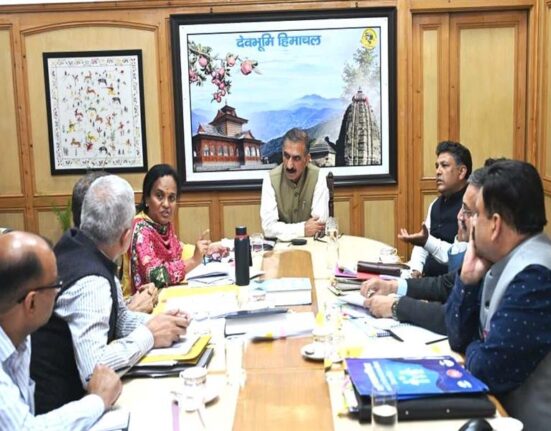
Addressing the valedictory session of the high-level workshop on “Towards Resilience Infrastructure Planning in the Western Himalaya” at the Himachal Pradesh Institute of Public Administration (HIPA), Shimla, the Chief Minister said the hill state has become increasingly vulnerable to natural disasters due to its fragile mountainous terrain and changing climate.
Recalling the devastating 2023 disaster, Sukhu said nearly 75,000 tourists were stranded across the state, but coordinated efforts by the government ensured their safe evacuation and rapid restoration of essential services. He also praised Revenue Minister Jagat Singh Negi and MLA Sanjay Awasthi for leading the rescue of around 300 stranded tourists from Chandratal Lake.
The Chief Minister said the 2023 disaster destroyed nearly 23,000 houses and claimed 51 lives, prompting the government to overhaul its relief policy. Compensation for fully damaged houses was increased from ₹1.30 lakh to ₹8 lakh, a move he described as historic. He added that the experience gained during the 2023 crisis helped the administration respond more effectively to the 2025 disaster, limiting losses despite its severity.
Sukhu attributed the increasing incidents of cloudbursts to climate change and higher evaporation from reservoirs created by large dams, warning that similar challenges could confront other states in the future. He said the government was prepared to take bold policy decisions and adopt sustainable development practices to reduce disaster risks.
Emphasising the importance of tourism to Himachal Pradesh’s economy, the Chief Minister said the government was committed to promoting sustainable tourism while working towards making the state self-reliant. During the event, Sukhu released the report, “Towards Resilient Himachal Pradesh: Lessons and Recommendations from the 2023 and 2025 Hydro-Meteorological Disasters,” and launched the Himachal Social Impact Assessment Management System (SIAU Portal) to strengthen data-driven governance, improve inter-departmental coordination and enhance administrative efficiency.
Experts at the workshop highlighted the need for resilient infrastructure planning in the ecologically fragile Western Himalayas. State Disaster Management Authority Vice Chairman Deepak Rathore called for stronger early warning systems, continuous monitoring of vulnerable glacial lakes and region-specific engineering standards for mountain areas. Former NITI Aayog member Dr. V.K. Paul described the 2023 disaster as a wake-up call and stressed the need for a coordinated, multi-sectoral approach to building climate-resilient infrastructure. Chief Secretary K.K. Pant said the government’s focus was not merely on rebuilding damaged infrastructure but on creating systems capable of withstanding future climate-related disasters through stronger institutional capacity and resilient planning.






Leave feedback about this